
Impermanence is a virtue: Why building for forever is folly
When I first started gardening, I was jealous of all the beautiful gardens I saw on social media. On Instagram I saw so many beautiful gardens filled with gorgeous raised beds. Or the gardeners were building these amazing structures for growing their annual vegetables. So, of course, I wanted the same thing for my garden.
I ordered fancy metal raised beds by whatever company was being advertised by the social media gardeners. You know the ones I'm talking about. They're about three two and a half feet tall and they look like they're made from corrugated tin. When they arrived, I assembled them and placed them in my yard, and filled them with some pretty expensive soil.
In fact, I dotted my entire backyard with raised beds. Some of them I purchased online, but others I built for myself from lumber I got at the hardware store. I put raised beds on my lawn, on my patio, and on all the ugly concrete that was laid by the last owner of my home. I was reclaiming that space for garden vegetables!
But there was still some leftover space in my backyard. There were a few spots of neglected, in-ground soil where I decided that I could plant a few seeds directly in the soil.
Then I watched my plants grow, and I was surprised by what happened. The raised beds required much more water than the plants in the ground. In fact, they required thorough watering on every hot day of the summer. The ones on hot concrete required even more water, and I indignantly watched a lot of it filtering out the bottom and into the drain!
In fact, the seeds in the soil germinated more quickly, required less care, and produced far, far more fruit.
Getting the moisture and the soil right in a tall raised bed turned out to be very difficult.
So the following year I decided to change things up. I took apart the raised beds that I'd built from lumber, and I turned them into shallow raised beds directly on the soil. A shallow, 6 inch deep raised bed has some of the advantages of a raised bed along with some of the advantages of planting directly in the ground.
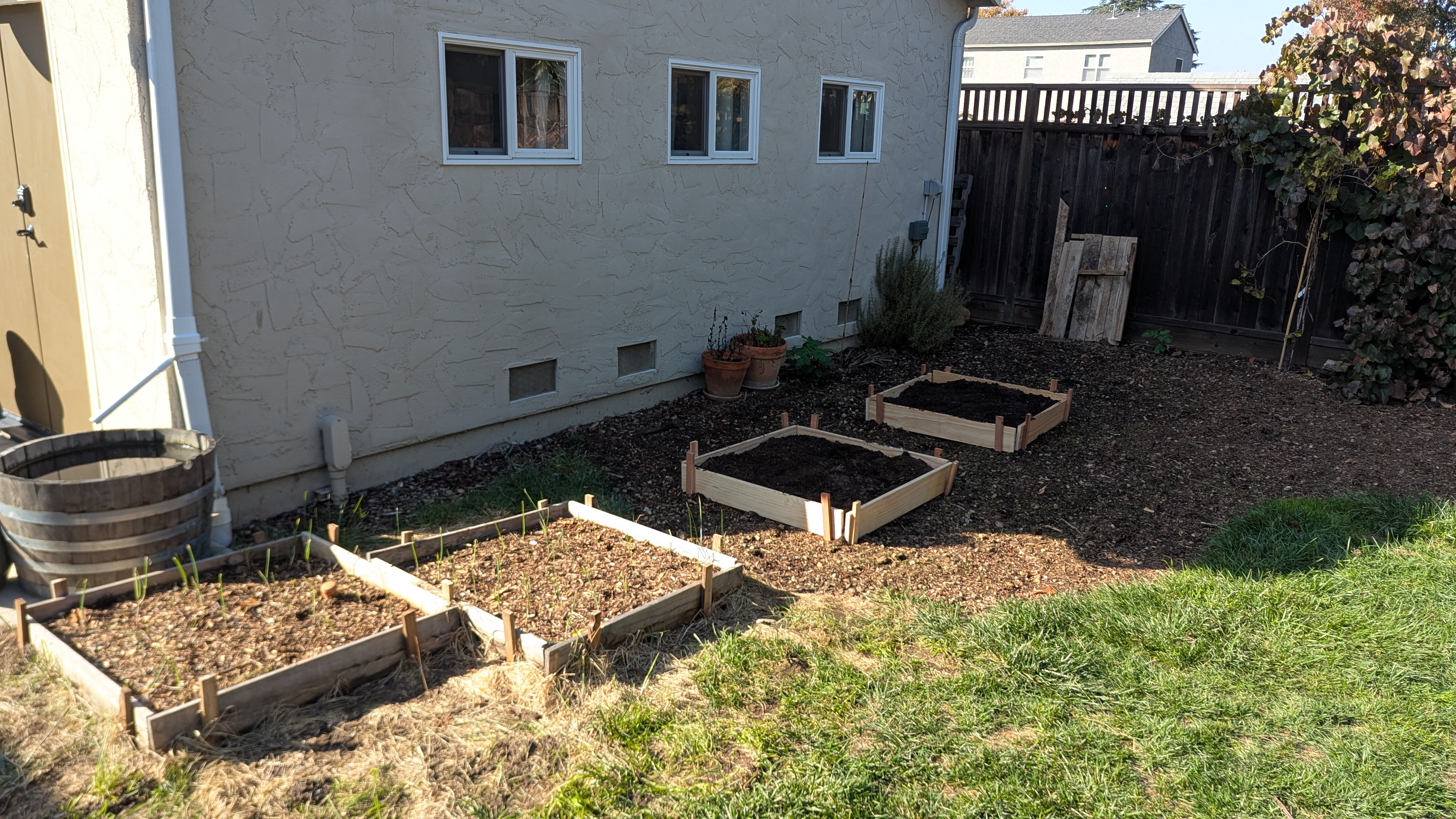
That turned out to be the most successful planting method that I've yet discovered. A shallow raised bed directly on the ground is easy to care for, easy to maintain, and easy to build. It's affordable, too. It requires less lumber, and less soil. It costs a fraction of what the fancy metal beds cost, and it even costs less than tall homemade beds.
Unfortunately, I was then stuck with all the "fancy" raised beds I'd purchased online. They looked more like expensive trash than the key to backyard success.
Buying those metal raised beds was a mistake.

And unfortunately, so much of my yard was taken up by a patio that I didn't have room for a bunch of shallow raised beds directly on the soil.
I knew that in order to install more shallow raised beds, the patio would have to come out, even though it wasn't very old. The previous owner had only put it in to sell the place around six years ago.
Building the patio had also been a mistake.
I know now that building for "permanence" is absurd. Especially in the garden. It's nothing but hubris to think that the thing you're building this year will last forever.
It won't.
And not only that, but you won't even want it to last forever. In a year or two or three, you will start to see the flaws in the thing you built. Maybe you'll see that you put it in a suboptimal place, or that it isn't quite right for what you planned to use it for. Or maybe you'll just tire of whatever motivated you to build it in the first place.
You WILL change. You WILL move on. You WILL see things differently.
Which is why I now build beds that I can easily disassemble, move, and reuse. I build garden beds simply by cutting lumber into one meter square sections, and tacking them into the ground using wooden stakes.
These beds cost next to nothing, they are the BEST way to grow annual vegetables, and they can be easily disassembled and moved every time I decide to do something different.
The thinking that we need to build something to last can be a trap. It's what leads people to build shopping malls that sit empty after shopping trends move on. It's what leads people to build from materials that will be used for a few years at most, then will idle in a landfill for eternity.
Don't get me wrong, the idea of single use items isn't great either.
But there is a middle ground.
Building for impermanence is a virtue because it's an extension of using only what you need.
So build that cheap garden bed out of biodegradable materials. When you inevitably regret it, or want to change it next year, it will be that much easier to do so.
Setting up a rain barrel in Santa Clara County
Last year I set up two rain barrels in my yard. One in the front yard and one in the back yard. But I made some mistakes, and I wanted to write a post about some of the things I learned so that others don't repeat my mistakes.
Earn that rebate
First of all, it's possible to get paid to set up a rain barrel. If you build it yourself and use affordable or secondhand supplies, then you can actually make money on your rain barrel. Rebates vary by county, and Santa Clara County will only pay you $35 per rain barrel, but I can imagine setting up five barrels using cheap equipment from Craigslist and making a tidy $175 for improving my home!
Basic plumbing isn't that difficult
Second, you should spend some time learning the basics of DIY plumbing before starting your project. Building a first flush filter and an overflow system is extremely easy if you bother to take the 30 minutes it takes to understand them. Not only that, but Santa Clara County will only offer you a rebate if you build the basic overflow system that they require.
Mosquitos are pretty lame
Finally, make sure to plan for a fully enclosed rain barrel. You can have a hole in the top to allow water to enter, but it must be sealed or covered with a screen to prevent mosquitos from reproducing in it. Again, this is a requirement of the county I live in, and it's probably a requirement of your county, too.
Learn from my mistakes
So what mistakes did I make when I built my rain barrels?
Well, I opted for aesthetics rather than going for the rebates. I built a system that looks good in my yard, as opposed to one that is robust and that qualifies for the rebates.
I wanted beautiful half wine barrels rather than ugly plastic barrels. Here I am posing with my system during a light fall rain.
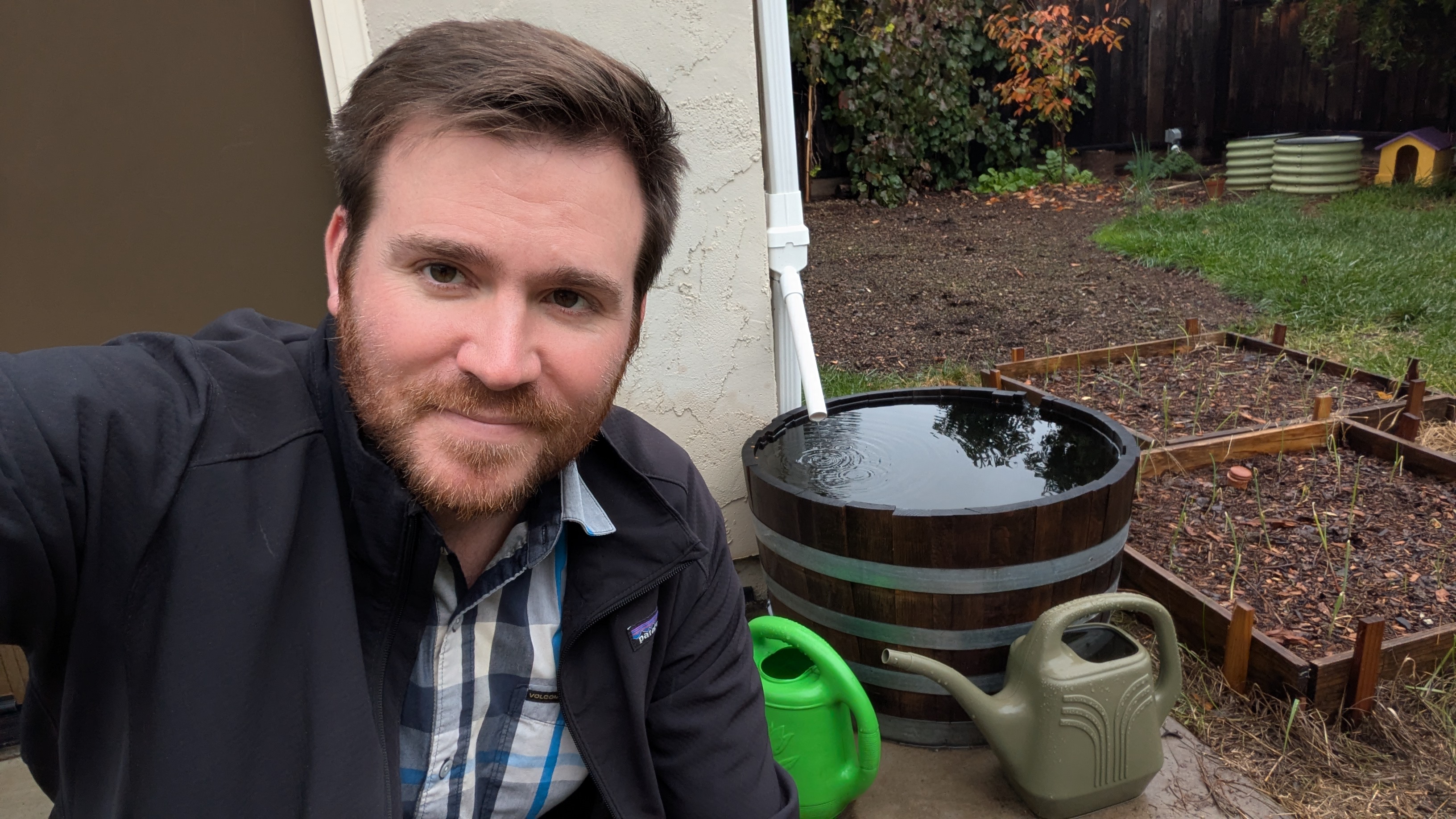
And I do think the system looks about as good as a rain barrel can. I like the aesthetic of a half filled wine barrel.
But boy do I need to use that water quickly! If I leave it in there for more than two weeks, then I will start seeing mosquito larvae in there, and that's really not good.
Also, there's no first flush filter or overflow mechanism, and since a half barrel is woefully inadequate for catching even a fraction of the rain from a decent rainstorm, these barrels are constantly overflowing.
I did install an adjustable diverter that allows me to only capture a small portion of the rain coming off my roof, but that's not nearly sufficient to a big storm.
So I am in the process of reworking my rain barrels. I am adding a first flush filter and a proper overflow system that goes back into the downspouts.
But I hope that you learn from my mistakes, and include those basic systems from the start!
My Father's Dragon is for book lovers
I love books so much that I enjoy them in multiple formats. I recently purchased a Supernote, and because of that I'm enjoying reading digital books for the first time in a long time. But I also love good, old fashioned paper books.
I love the way they feel in my hands, I love the way they smell, and I especially love the way they look. A book with good illustrations is entrancing.
Which is why I have a small collection of relatively inexpensive books that are notable only because they are well-illustrated.
Today I want to share a recent discovery called My Father's Dragon. Apparently, I'm late to the party, because Netflix made it into a movie a few years ago, but I only recently discovered it.
It was written by a woman named Ruth Stiles Gannett and illustrated by her stepmother, Ruth Chrisman Gannett.
I'm not going to lie; despite it being only a few dozen pages long, I've never read it. I purchased it only because it is one of the most lavishly illustrated books I've ever seen. Nearly every open fold is illustrated.
And I'm posting about it now because it makes a great gift. You can still get good quality first editions from 1948 for under $20 on ebay.
For someone who loves books, and the art of illustration, it's $20 worth of magic.
Name calling is still rude and ineffective
One of the things I dislike most is black and white thinking: when a person breaks down a situation and decides that there are only two sides, the good and the bad. The right and the wrong. That's almost never a good analysis of... anything.
One of the signs of black and white thinking is name calling, yet name calling seems to be the main form of political discourse these days.
We call people names when we want to turn them into the "other". When we want people to see them as less than human. When we want to justify the way we treat them.
Name calling generally has the intended effect. It pushes people away and separates them from the group in power (the group who is inventing the names). It is drawing a line in the sand and saying that anyone who might fit that name is on the other side (the "bad" side).
What's tragic in today's politics is that people are often unaware that they are even participating in this. I see so many well educated and well intentioned people spouting these weird vocabularies that only make sense to the other people in the increasingly small in-group.
Obviously we hear this from the president the most. His word salad is so dense it's almost impenetrable. To him, his enemies are woke antifa leftist communist snowflakes. I think his leadership is a significant part of the problem.
But we see this equally from the groups in power on the left. The left continues to wonder why men aren't voting for Democrats, while continuing to invent new ways to denigrate men. Today the boogey man is the incel tech bro performative misogynist manosphere. While I generally consider myself a liberal, I think some of the talking heads on the left are nearly as difficult to understand as the president.
In both cases using this rhetoric is shameful, rude, and just plain lazy analysis.
Because most people are good people no matter which "side" they're on. Most people are not racists or misogynists or communists or terrorists. They are good people who disagree with a lot of the rhetoric even from their own side. They have complex feelings toward the government and toward the politics of today.
They love their community, and their country, and they want to do the right thing for the people who live there.

But name calling isn't just lazy analysis, it also accomplishes the opposite of what people usually want to do. When we use words like this, words that turn people into the "other", we push them away. Instead of bringing them alongside us, we are making it more difficult for them to see our side.
On social media this happens every day. People spend 5 minutes venting their rage then move on to whatever is next. They live on anger. In my head I call them "social media rage goblins", but I recognize that making up a name for them is somewhat ironic.
On traditional media I wonder how these people continue to find work.
What I would like to see from leaders and commenters is a refusal to engage with the most fringe beliefs like those spouted on the internet by anonymous people on the far left or far right. Instead of centering the people with the worst beliefs, let's talk to the rational people on the other side. We should lead by showing that we know that fringe beliefs are not the beliefs of most regular people.
Maybe this post is just an old fashioned call for civility. Maybe it's as antiquated and obsolete as the president's tax and tariff policies.
But I still want everyone to recognize the fundamental humanity in their political opponents. Generosity shown to someone you disagree with is the highest human virtue.
Revisiting my garden goals for 2025
Well, it's September of 2025 and the gardening season is coming to an end. It's just about time to begin cleaning up from 2025, and making plans for 2026. In fact, I'm starting to come up with goals for my 2026 season, so I figured that it was a good time to revisit my goals for 2025 and see how I did.
Spoiler: I didn't succeed with all of them.
1. Have success with full sized tomatoes
In 2025 I wanted to go over the top with full sized tomatoes for the first time in my gardening career. In years past, I had a mountain of success with cherry tomatoes, which are very easy to grow. And I harvested a few full sized tomatoes from plants in a few years. But I'd never been overwhelmed with tomatoes. In 2025 I wanted to be giving away tomatoes to my neighbors.
So I listened to Farmer Fred's annual tomato show where he and Dan Shor discuss the tomato varieties that they're excited about. I picked three varieties that they discussed: Rugby, San Marzano, and Bush Early Girl. I started those from seed. Then I was gifted a fourth variety from a friend. It was Chef's Choice Black, I think.
I'm proud to report that my tomatoes were an overwhelming success this year. I had so many tomatoes that Erin made tomato soup, tomato ketchup, and tomato sauce. Even after all that, we were still giving bags of tomatoes away to neighbors.
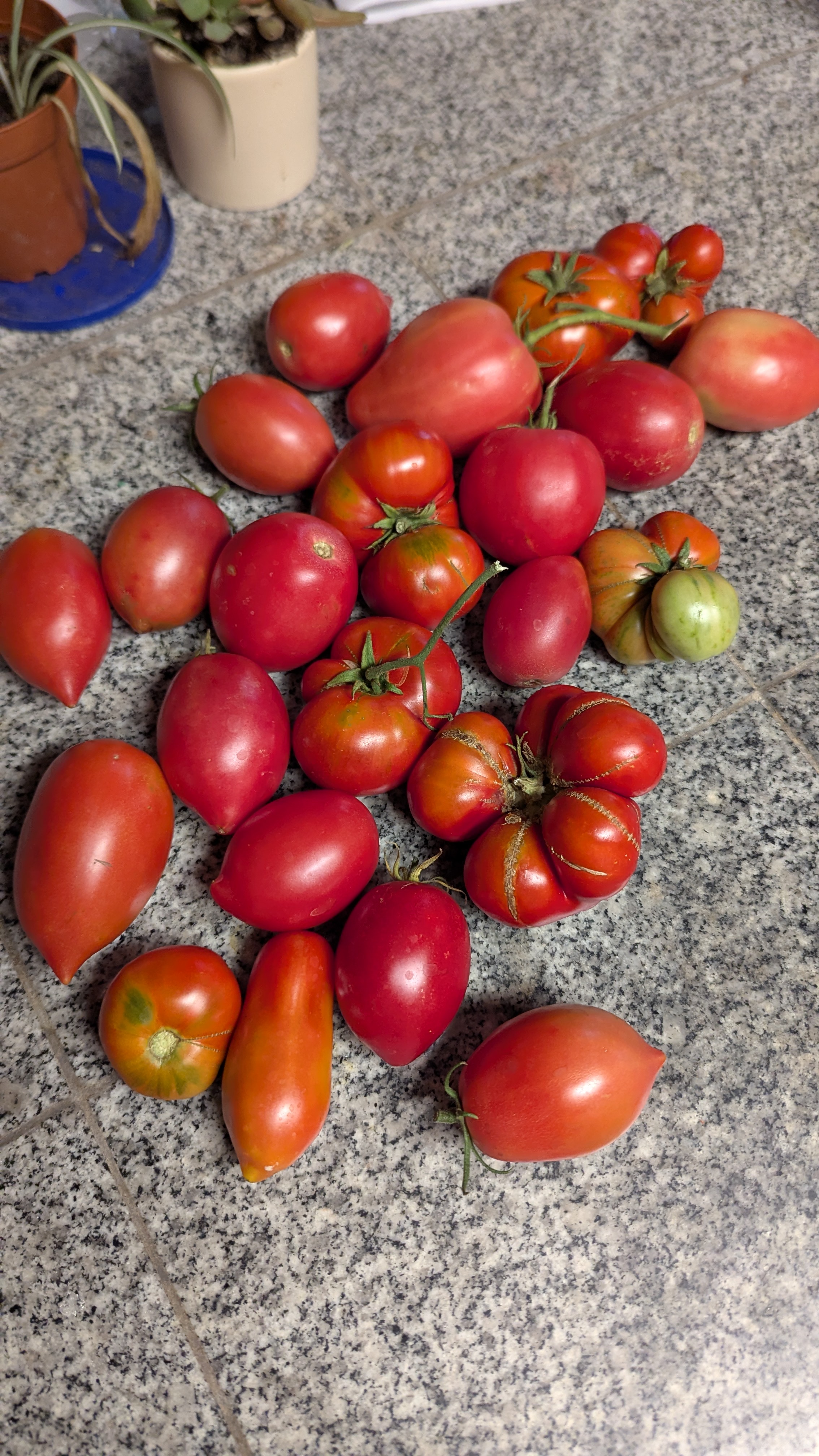
Still, it wasn't a universal success. My tomatoes in the ground did great, but my tomatoes in containers were pretty disappointing. Maybe next year I will give a little more thought to the varieties I put in containers and how I care for them.
VERDICT: SUCCESS!
2. Have success growing cucumbers
I had the exact same goal with cucumbers. I'd grown cucumbers in the past, but they generally produced very few fruit that weren't very tasty. This year I wanted to be swimming in cucumbers.
So what did I do?
Well, I started my cucumbers from seed a little early in the season. I started more plants than I thought I needed, and ultimately I put six of them into the ground about two weeks before it was recommended because they were out-growing their containers.
Then I watered every day and built trellises from sticks I had laying around.
And let me tell you, we ate cucumbers until we were tired of them. I think I ate cucumber sandwiches for every lunch for a month. I was forcing the kids to eat cucumber sandwiches, too. It was definitely the best cucumber harvest I've ever experienced, and it was a lot of fun.
VERDICT: SUCCESS!
3. Grow eggplant for the first time
Every year I try to grow something that I've never grown before. This year I tried eggplant. I grew the heirloom variety Black Beauty from seed, and transplanted three eggplants into containers a few weeks after I put my tomatoes in.
But I made several mistakes.
First, I put two eggplant bushes into one container. It is one of my largest containers, but I see now that eggplants are such heavy feeders that they can't share space with another eggplant.
Second, I put the third eggplant in a container that was too far from my door. This led to me underwatering it, and it only producing a single fruit.
The problem with crowding my eggplants together was that the eggplants never reached full size. So I never noticed that they were coming into ripeness at a smaller size, and I let almost all of them become bitter and overripe.
Erin was a trooper and she still made eggplant parmesan from the few good looking ones that we harvested, but even those were a bit overripe.
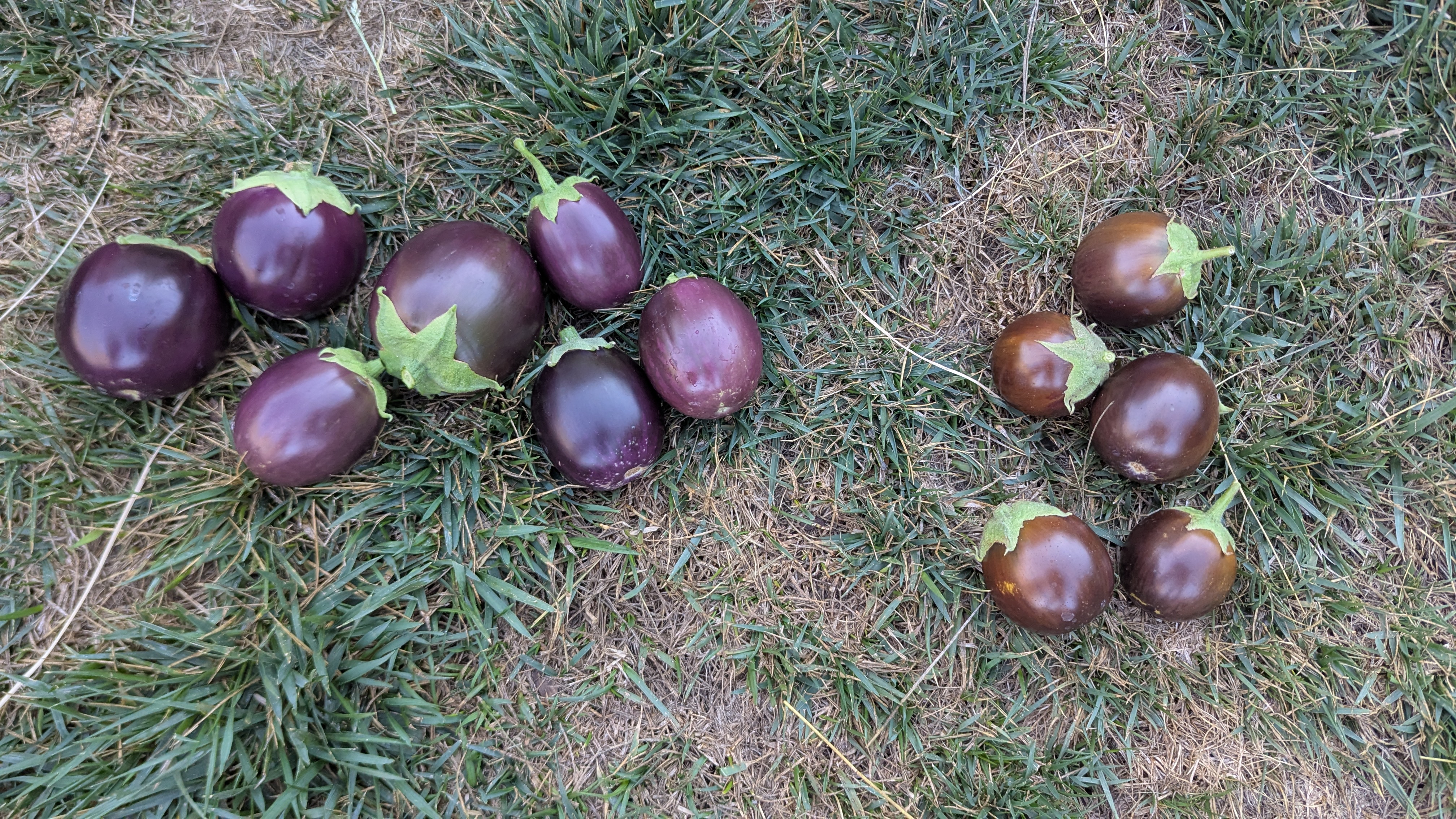
So I failed at my first time growing eggplant, but that's how it usually goes when you grow something for the first time. In a way, I expected to fail. Failing at growing eggplants this year makes it much more likely that I will succeed at growing them next year.
VERDICT: FAIL!
4. Propagate more native plants
Last year I had a small success with native plant propagation. I collected seeds from California Buckeyes and grew them in containers. When some of my friends had a planting project in the spring where they needed trees, I was fortunate to be able to step in and give them around 10 California Buckeye saplings.
This year I wanted to repear that success, but with several different varieties of plants. I wanted to grow oak, toyon, sagebrush, and Roger's Red Grape.
I collected seeds conservatively from local parks, only taking one or two from each plant. Then I cold stratified the oak acorns over the winter and planted them in the spring. I'm pleased to report that I have around 10 oak seedlings growing in containers in my backyard right now.
I also have around 10 toyon, 5 or 6 native grapes, and around 10 containers of native irises. In fact, I'm most proud of the irises because I had to divide irises on my own for the first time.
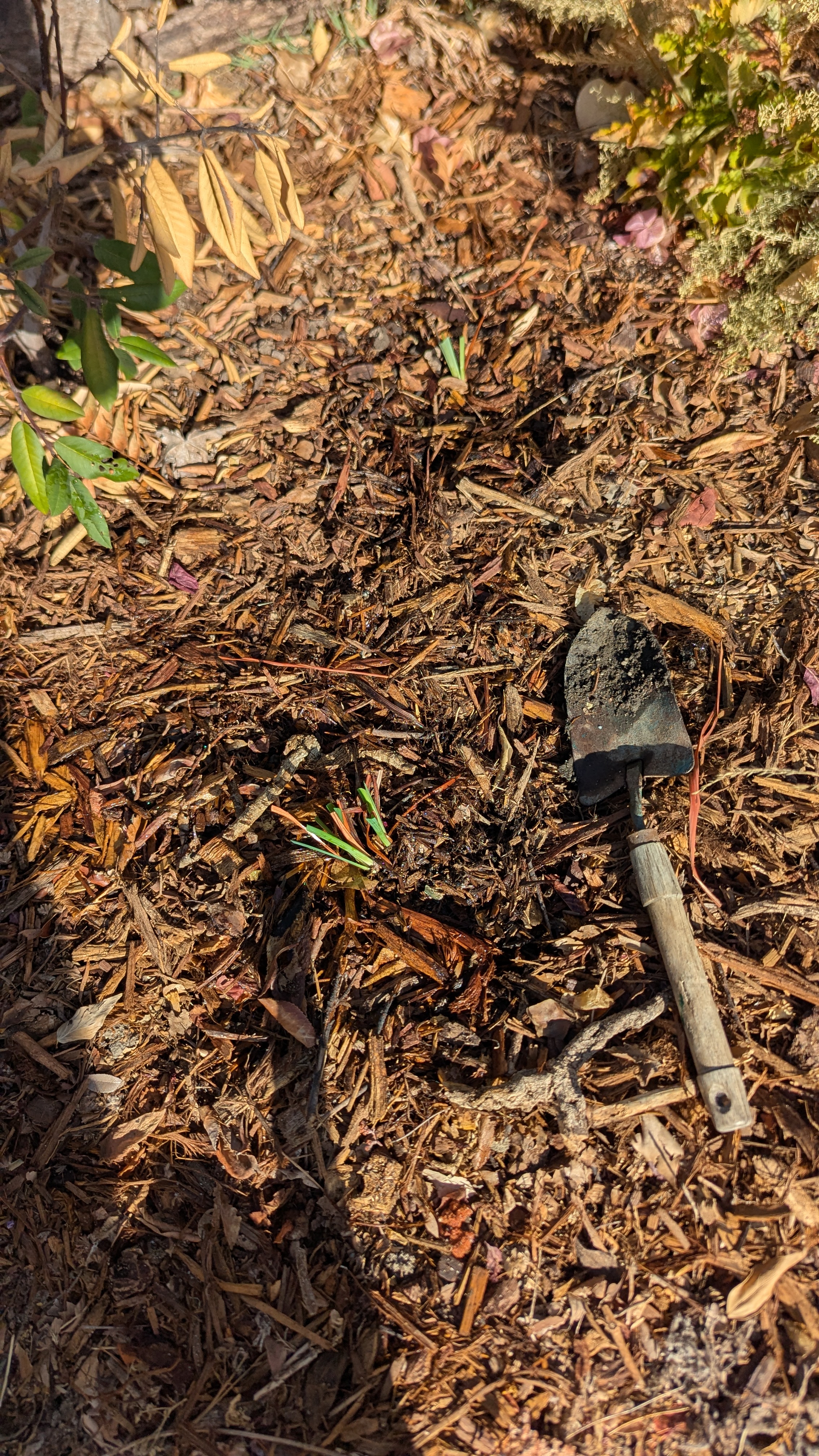
Still, I wasn't successful with all the plants that I wanted to propagate. I wanted to propagate sagebrush by cutting, but I failed at every attempt. I'm going to ask a friendly local native plant expert about how she propagates sagebrush and give it another go.
VERDICT: SUCCESS!
5. Grow Dan Tucker pumpkins
In 2024 I thought about buying a cabin outside the city. In fact, this is something I'm still working on. I'm tired of living in the city. I want to have a big garden and grow lots of fruit trees. So I started visiting cabins on a few acres of land in 2024.
At one such cabin, I met a man named Dan Tucker. He showed me all around his beautiful property. We talked about his career as an organic farmer in Texas. We talked about his cancer diagnosis. I told him about wanting to get out of the city and away from the traffic. He showed me where salmon swim upstream on a creek nearby, and where the rare native flowers grow.
I loved his place, but I didn't have the money to give him the most competitive offer. It's no surprise that he sold to someone else.
Still, before I left that day he gave me some seeds. They were pumpkin seeds that he bred by crossing Mother Hubbard and Speckled Hound varieties, and I'm going to call the result Dan Tucker Pumpkins in his honor.
So how did I do growing them? Well, I tried to start them in the ground twice and failed both times. By that point it was quite late to start more pumpkins, but I couldn't just give up on them. So I started more in a cup, and just when they were ready to go in the ground I had to fly across the country. I asked a neighbor to water them but I still lost 2 out of 3.
Still, there is one growing in my front yard, and it has a few female flowers that I'm hoping were pollinated successfully. I still won't know for a few more weeks if I've had success with this one or not, but I'm hoping that I will get at least one funky looking pumpkin from all this effort.
VERDICT: TBD!